Precision Over Guesswork: How Strategic Medication Timing Can Elevate Your Fertility Treatment Outcomes
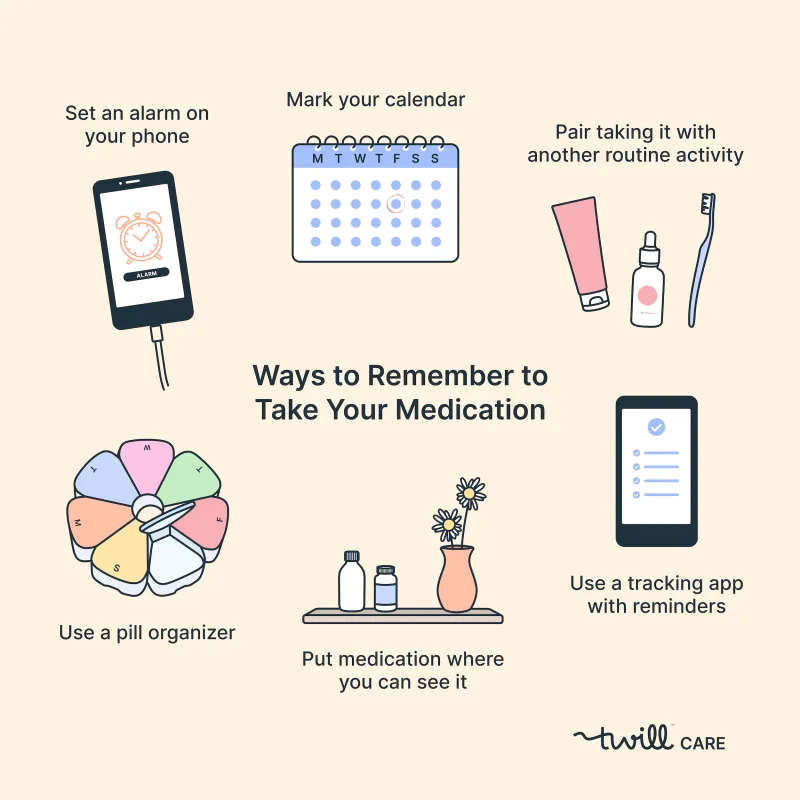
Photo: woman organizing medication pills with calendar and phone alarm reminder, via twill-happifiers-cms-uploads.happify.com
Why Timing Is a Clinical Variable, Not a Convenience Factor
Patients beginning fertility treatment often focus their attention on dosage—how much medication they are taking and whether it is the right amount for their situation. What receives comparatively less attention, yet carries significant clinical weight, is the question of when that medication is taken. For fertility drugs, timing is not a secondary consideration. It is a primary variable that can meaningfully influence whether a treatment cycle produces the intended physiological response.
This is particularly true for medications that work by interacting with the body's hormonal feedback systems. Clomid (clomiphene citrate), the most widely prescribed oral fertility medication in the United States, operates by blocking estrogen receptors in the hypothalamus, which in turn stimulates the release of follicle-stimulating hormone (FSH) and luteinizing hormone (LH). The effectiveness of this mechanism depends heavily on where a patient is in their menstrual cycle when the drug is introduced—and on the consistency with which it is administered each day during the treatment window.
The Clomid Dosing Window: Days 3–5 vs. Days 5–9
Clomid is typically prescribed for five consecutive days per cycle, most commonly beginning on either cycle day 3 or cycle day 5 (with day 1 defined as the first day of full menstrual flow). Both windows are clinically accepted, but they are not interchangeable for every patient.
Beginning on cycle day 3 tends to recruit a larger cohort of follicles earlier in the cycle, which may be advantageous for patients who have had a limited follicular response in prior cycles. Starting on cycle day 5 allows for a slightly longer period of natural follicular development before the drug's influence begins, which some providers prefer for patients who respond more robustly.
Your prescribing physician will determine which starting day is appropriate based on your individual history and monitoring data. What matters most from a patient adherence standpoint is that once a start day is established, the five-day sequence is completed without interruption. Skipping a dose or shifting the schedule mid-cycle disrupts the hormonal signaling cascade the medication is designed to create.
Time-of-Day Consistency: More Important Than Most Patients Realize
Beyond cycle day selection, the time of day at which Clomid is taken each day carries its own clinical relevance. Because clomiphene has a half-life of approximately five to seven days, daily dosing within a five-day window creates a cumulative concentration in the body. Taking the medication at a consistent time each day—morning, midday, or evening—helps maintain a stable plasma concentration and avoids inadvertent gaps or overlaps in the dosing interval.
Many patients find that taking Clomid in the evening helps manage one of its most commonly reported side effects: hot flashes. By timing the dose close to bedtime, some of the peak side effect period occurs during sleep, when it is less disruptive to daily function. This is not a clinically mandated recommendation, but it is a practical consideration worth discussing with your provider.
The key principle is consistency. Choose a time that fits your daily schedule reliably, set a reminder on your phone, and maintain that time throughout all five days of the dosing window.
Tracking Ovulation: Coordinating Monitoring With Your Dosing Schedule
Clomid is intended to induce ovulation, typically occurring six to twelve days after the last pill is taken. To confirm that ovulation has occurred and to time intercourse or intrauterine insemination (IUI) appropriately, most providers recommend one or more of the following monitoring tools:
Ovulation predictor kits (OPKs): These urine-based tests detect the LH surge that precedes ovulation by approximately 24 to 36 hours. For patients on Clomid, OPK testing typically begins around cycle day 10 to 11, depending on when the dosing window started. Testing once or twice daily during this window increases the likelihood of detecting the surge before it peaks.
Basal body temperature (BBT) tracking: A sustained rise in resting body temperature of approximately 0.2°F or more, measured first thing in the morning before any activity, indicates that ovulation has occurred. BBT tracking is most useful as a confirmatory tool rather than a predictive one, as the temperature shift is detected after the fact.
Transvaginal ultrasound monitoring: Some providers schedule mid-cycle ultrasounds to directly visualize follicular development and assess whether follicles have reached a mature size (typically 18–22 mm). This method provides the most precise data and is standard practice in IUI cycles.
Understanding how these monitoring tools interact with your dosing schedule allows you to plan effectively and avoid missing the optimal window for conception.
Injectable Medications: Where Timing Precision Becomes Even More Critical
For patients who progress to injectable gonadotropins—such as FSH-containing medications used in more advanced protocols—timing precision becomes considerably more demanding. Unlike oral medications, injectables are typically administered daily and at specific intervals relative to other medications in the protocol.
Of particular importance is the trigger shot, most commonly human chorionic gonadotropin (hCG), which is administered to induce final follicular maturation and trigger ovulation. The timing of the trigger shot is calculated precisely by the treating physician based on ultrasound measurements and estrogen levels. Ovulation typically occurs 36 to 40 hours after the hCG injection, which means that IUI procedures or intercourse timing is scheduled with that window in mind.
Administering the trigger shot even a few hours outside the prescribed window can shift the ovulation timeline in ways that affect the precision of subsequent timing. Patients using injectable protocols should treat the trigger shot time as a fixed appointment, not an approximation.
Common Scheduling Mistakes and How to Avoid Them
Several recurring scheduling errors can compromise treatment outcomes, even when the right medication at the right dose has been prescribed:
Starting Clomid on the wrong cycle day. This is particularly common when patients are unsure whether light spotting qualifies as day 1 of their cycle. When in doubt, contact your provider's office for clarification before beginning the dosing sequence.
Inconsistent daily timing. Taking a medication at 8:00 a.m. on day one and 11:00 p.m. on day three creates unnecessary variability. Consistency within a 30-minute window each day is the practical standard to aim for.
Missing OPK testing during the detection window. Patients who test only once per day, or who begin testing too late in the cycle, may miss the LH surge entirely. Daily testing starting on the appropriate cycle day—with twice-daily testing if the surge has not been detected by day 14—reduces this risk.
Failing to account for medication interactions in combination protocols. Patients using Clomid alongside letrozole, gonadotropins, or progesterone supplementation should have a written schedule provided by their care team that maps each medication to specific cycle days and times. Relying on memory alone for multi-drug protocols introduces unnecessary risk.
Building a Schedule You Can Maintain
The most precisely designed medication protocol is only as effective as a patient's ability to adhere to it. Practical tools—phone alarms, pill organizers with time-of-day compartments, cycle tracking apps, and written calendars—translate clinical recommendations into sustainable daily habits.
At ClomidCare USA, we recognize that managing fertility treatment alongside a full personal and professional life requires more than a prescription. It requires a system. Patients who take the time to build that system before their cycle begins are measurably better positioned to follow through with the precision that fertility medication timing demands.