What Your Medicine Cabinet Doesn't Know: The Science of Storing Fertility Drugs Correctly
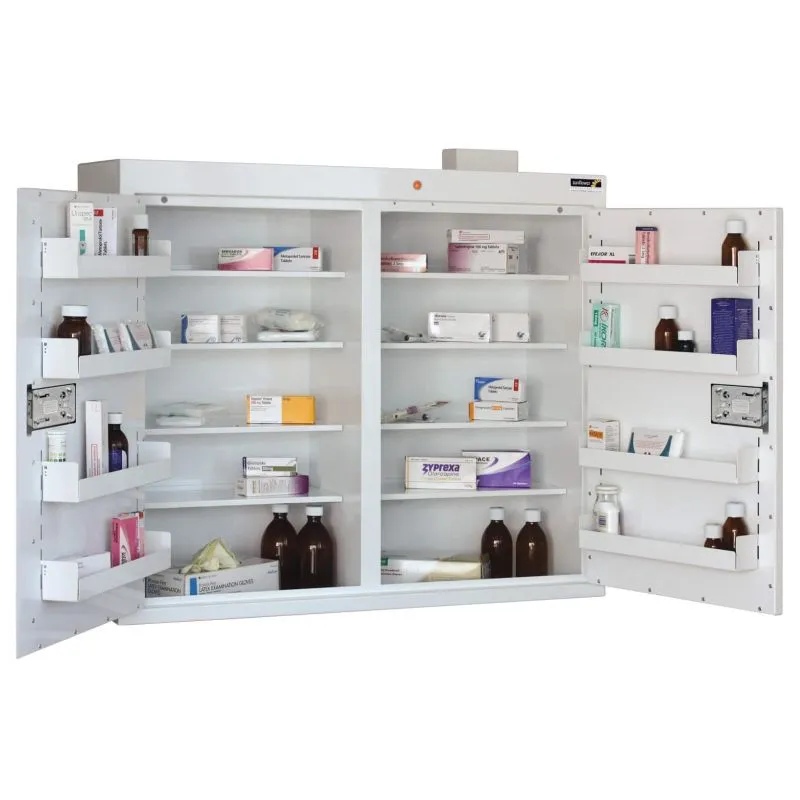
Photo: organized home medication storage cabinet with prescription bottles and temperature controlled environment, via www.healthandcare.co.uk
Most patients investing in fertility treatment spend considerable time researching dosages, cycle timing, and potential side effects. Far fewer give serious thought to what happens to their medications between the pharmacy and the moment of administration. That gap in attention can be costly. Pharmaceutical compounds are chemically sensitive, and fertility drugs—including clomiphene citrate (Clomid), letrozole, gonadotropins, and progesterone supplements—can lose measurable potency when exposed to the wrong environmental conditions.
At ClomidCare USA, we believe that delivering the right medication is only half the equation. Understanding how to preserve that medication's integrity at home is equally important to achieving the outcomes you and your care team are working toward.
Why Storage Conditions Matter More Than You Might Think
Pharmaceutical stability is not a marketing concept—it is a regulatory and scientific standard. The U.S. Food and Drug Administration (FDA) requires manufacturers to conduct stability testing under defined temperature and humidity conditions before a drug receives approval. Those storage recommendations printed on your prescription label are not arbitrary suggestions; they represent the threshold below which a drug's efficacy can no longer be guaranteed.
When a medication degrades, it does not simply become less effective in a predictable, linear way. Depending on the compound, degradation can produce byproducts that are pharmacologically inert, or in some cases, mildly antagonistic to the drug's intended mechanism. For patients relying on precise hormonal signaling—as is the case with ovulation induction therapies—even modest potency loss can shift a cycle's outcome in ways that are difficult to detect without close monitoring.
Optimal Conditions for Common Fertility Medications
Clomiphene Citrate (Clomid and generics): The standard storage recommendation for clomiphene citrate is room temperature, generally defined as 68°F to 77°F (20°C to 25°C), with short-term excursions permitted between 59°F and 86°F. The drug should be kept away from moisture and direct light. A bedroom drawer or a dedicated, dry cabinet in a climate-controlled room is typically appropriate. The bathroom medicine cabinet—despite its cultural ubiquity—is one of the worst locations due to heat and humidity generated by showers.
Letrozole (Femara and generics): Letrozole shares similar temperature requirements with clomiphene and should also be stored away from moisture and light. It is particularly sensitive to humidity-driven degradation, making storage in kitchens or bathrooms inadvisable.
Injectable Gonadotropins (FSH, hMG, HCG): These protein-based hormones require refrigeration, typically between 36°F and 46°F (2°C to 8°C), and must never be frozen. Many formulations also have a limited window of stability once reconstituted or opened. Patients should consult their pharmacist about the specific product they have been prescribed, as stability windows vary by brand and formulation.
Progesterone Supplements (oral, vaginal, and injectable): Oral micronized progesterone capsules are generally stored at room temperature and away from light. Vaginal suppositories may have refrigeration requirements depending on the formulation. Oil-based injectable progesterone should be stored at room temperature and may need gentle warming before use to reduce viscosity—never microwave or use boiling water.
The Role of Temperature: A Closer Look
Temperature is the most critical storage variable for most oral fertility medications. Heat accelerates chemical reactions, including the breakdown of active pharmaceutical ingredients. A car glove compartment in summer can reach temperatures exceeding 130°F—a condition that can compromise a medication's integrity within hours. Similarly, placing medications near a stove, on a sunny windowsill, or in a car's center console during warm months introduces risk that patients rarely anticipate.
Conversely, freezing temperatures can damage certain formulations. Moisture condensation that forms when a frozen medication thaws can introduce water into tablets or capsules, accelerating hydrolytic degradation. Refrigerated injectables that accidentally freeze may denature protein structures, rendering the hormone biologically inactive.
Humidity and Light: The Silent Degraders
Humidity promotes hydrolysis—a chemical reaction in which water molecules break apart drug compounds. Tablets and capsules are especially vulnerable because their coatings and binders absorb atmospheric moisture, which then reaches the active ingredient. In high-humidity regions of the United States, including the Gulf Coast, the Southeast, and parts of the Pacific Northwest, this risk is elevated during summer months.
Light exposure, particularly ultraviolet (UV) radiation, drives photodegradation in many pharmaceutical compounds. This is why many medications are dispensed in amber-colored bottles. Even indirect sunlight through a window can be sufficient to initiate degradation over time. Storing medications in opaque containers or within a closed cabinet—away from any window—is a straightforward protective measure.
State-by-State Climate Considerations
The United States encompasses an extraordinary range of climate conditions, and patients should factor their local environment into their storage strategy:
- Hot, arid climates (Arizona, Nevada, New Mexico): Extreme heat is the primary concern. Air-conditioned storage is essential during summer. Medications should never be left in vehicles.
- Hot, humid climates (Florida, Louisiana, Texas Gulf Coast): Both heat and humidity present simultaneous risks. Silica gel desiccant packets placed in medication storage containers can help manage ambient moisture.
- Cold climates (Minnesota, Montana, Maine): Winter heating systems can create surprisingly dry indoor air, but temperature swings near exterior walls or poorly insulated spaces can expose medications to cold extremes. Avoid storing medications in garages or near exterior-facing cabinets.
- Temperate climates (Pacific Northwest, Mid-Atlantic): Seasonal humidity shifts require attention, particularly in summer. A dedicated interior cabinet remains the safest option year-round.
Practical Steps for Organizing Your Medication Storage
- Designate a single, consistent storage location that is interior-facing, away from heat sources, and not in a bathroom or kitchen.
- Use a small, sealable container with a desiccant packet to minimize humidity exposure for oral medications.
- Invest in a dedicated mini-refrigerator or a clearly labeled section of your main refrigerator for injectables that require cold storage, ensuring the temperature is monitored and consistent.
- Check expiration dates at the start of each cycle. Medications that have passed their expiration date or have been stored improperly should be discussed with your pharmacist before use.
- Keep medications in their original packaging whenever possible, as manufacturers design packaging to provide an additional barrier against light and moisture.
- Document your storage conditions if you have any concerns—a simple log noting room temperature during a heat wave, for example, gives your care team useful context if a cycle produces unexpected results.
A Final Word on Protecting Your Investment
Fertility treatment represents a significant financial and emotional investment. The medications at the center of that treatment deserve the same careful attention as the clinical decisions surrounding them. By treating storage as an active component of your protocol—not an afterthought—you preserve the integrity of every dose and give your treatment plan the best possible foundation for success.
If you have questions about the specific storage requirements for medications dispensed through ClomidCare USA, our pharmacist support team is available to provide guidance tailored to your prescription and your home environment.