Expired Fertility Medications: Separating Genuine Risk From Pharmaceutical Overcaution
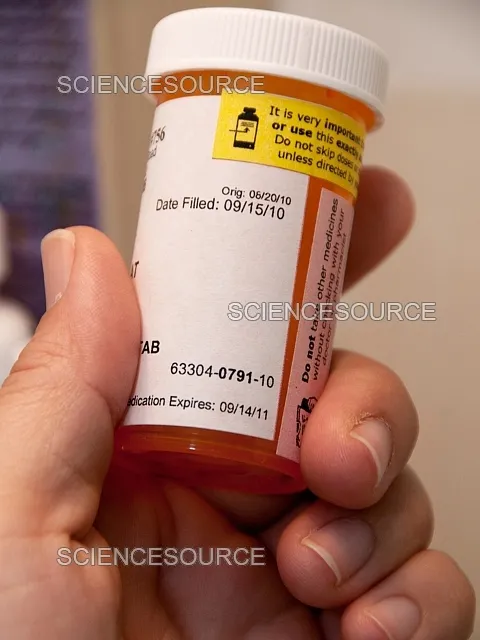
Photo: pharmaceutical medication expiration date pills bottles laboratory, via www.sciencesource.com
For anyone navigating the financial and emotional terrain of fertility treatment, discovering that a vial of injectable gonadotropins or a blister pack of clomiphene has crossed its expiration date can feel like a minor catastrophe. The instinct is often to discard and reorder—an impulse that, while understandable, may not always be scientifically necessary. At the same time, dismissing expiration dates entirely would be equally misguided. The truth lies in understanding what those dates actually represent, how different drug classes behave over time, and when the clinical stakes genuinely warrant concern.
What Expiration Dates Actually Measure
Pharmaceutical expiration dates are not arbitrary. Under regulations established by the U.S. Food and Drug Administration, manufacturers are required to conduct stability testing that demonstrates a drug maintains at least 90 percent of its labeled potency through the stated date. The expiration printed on a package is therefore the last date tested, not necessarily the date at which the medication becomes ineffective or harmful.
This distinction matters. A drug tested through 24 months may remain stable for 30 or 36 months under proper conditions—the manufacturer simply has no regulatory obligation to test beyond what is commercially practical. The FDA's own Shelf Life Extension Program, originally developed for military stockpiles, has repeatedly demonstrated that many medications retain potency years beyond their labeled dates when stored correctly. That program, while not directly applicable to consumer pharmaceuticals, provides meaningful scientific context for understanding how pharmaceutical stability works in practice.
How Different Fertility Drug Classes Age
Not all fertility medications degrade at the same rate or in the same way. Understanding how specific drug classes behave over time helps patients and clinicians make more informed decisions.
Clomiphene citrate (Clomid and generics): As a synthetic oral compound with a relatively stable molecular structure, clomiphene tends to hold its potency well beyond its labeled date when stored in a cool, dry environment away from direct light. Degradation in tablet form typically manifests as a gradual loss of active compound concentration rather than the formation of toxic byproducts, meaning an expired tablet is more likely to be mildly less effective than actively harmful. That said, any reduction in potency during a monitored cycle creates real clinical problems—a lower-than-expected ovulatory response can disrupt timing protocols and waste an entire cycle.
Gonadotropins (FSH, LH, hCG injectables): This category warrants considerably more caution. Gonadotropins are protein-based hormones, and proteins are inherently susceptible to structural changes over time—a process called denaturation. Once denatured, these molecules may lose biological activity or, in some formulations, develop aggregates that could theoretically trigger immune responses. Refrigerated, unopened vials may maintain stability somewhat beyond their expiration date, but the margin is narrower than with small-molecule oral drugs, and the consequences of reduced potency during a stimulation cycle are more significant.
Progesterone suppositories and gels: These formulations are sensitive to both temperature fluctuations and time. Excipients (the non-active ingredients that make up the base of suppositories or gels) can separate, oxidize, or change in texture, which affects drug delivery even if the active compound itself remains chemically intact. Patients using progesterone support during a luteal phase have very little tolerance for delivery inconsistency.
Letrozole (Femara and generics): Like clomiphene, letrozole is a small-molecule oral aromatase inhibitor with relatively favorable stability characteristics. The degradation profile is gradual, and properly stored tablets that are modestly past their expiration date are unlikely to present acute safety concerns—though potency loss remains a clinical consideration.
The Storage Variable That Changes Everything
Expiration dates are assigned under the assumption of ideal storage conditions: controlled room temperature (typically 68–77°F), low humidity, and protection from light. When those conditions are not met—a bathroom medicine cabinet exposed to steam, a car's glove compartment in a Texas summer, or a windowsill where injectable vials catch afternoon sun—degradation accelerates substantially. A medication that might retain 95 percent potency two months past its expiration date under ideal conditions may be significantly compromised at the same time point if it has been stored improperly.
This is a critical and frequently overlooked variable. Patients who discover an expired medication should consider not only how long it has been past its date, but how it has been stored throughout its life. Refrigerated injectables that have never been exposed to temperature excursions occupy a very different risk category than oral tablets that have spent months in a humid bathroom.
When Expired Medications Pose Genuine Clinical Risk
There are circumstances where using an expired fertility medication is genuinely inadvisable, not merely overly cautious:
- Injectable gonadotropins beyond six months past expiration, particularly if storage conditions were imperfect, should not be used in a monitored stimulation cycle. The stakes of an inadequate response—a cancelled cycle, an unanticipated outcome, or a disrupted IVF retrieval—are too high.
- Any medication that has changed in appearance—discoloration, cloudiness in a solution that should be clear, crystallization, or unusual odor—should be discarded regardless of its expiration status. Physical changes are direct evidence of chemical instability.
- Medications that have been reconstituted (mixed from powder and diluent) carry a much shorter window of stability, typically 24 to 72 hours depending on the product. Expiration dates on the original vial are irrelevant once a drug has been mixed.
- Medications used during IVF or other high-stakes protocols where precise dosing is critical to outcomes. When cycle success depends on hitting narrow pharmacological targets, the margin for potency variability is essentially zero.
The Financial Pressure That Drives the Question
It would be intellectually dishonest to discuss expired fertility medications without acknowledging why patients are asking the question in the first place. Fertility drugs are expensive. A single vial of a branded gonadotropin can cost several hundred dollars, and a full stimulation cycle may require thousands of dollars in medications alone. When a patient discovers an expired medication, the decision to discard it is not always straightforward—it may represent a significant financial setback.
This is precisely why proactive medication management matters. Ordering medications close to the time they will be used, understanding storage requirements from the moment a prescription is filled, and communicating with your prescribing physician about any timing changes that might leave you with unused stock are all strategies that reduce the likelihood of facing this dilemma.
What to Do When You Find Yourself in This Situation
If you discover that a fertility medication has passed its expiration date before you have had the chance to use it, the appropriate first step is a direct conversation with your reproductive endocrinologist or prescribing physician—not a unilateral decision to proceed or discard. Your clinical team can assess the specific medication, how far past its date it is, what is known about its stability profile, and how the answer fits into your particular protocol.
In some cases, particularly with oral medications modestly past their date and stored correctly, a clinician may determine that proceeding is reasonable with appropriate monitoring. In others—especially with injectables central to a stimulation protocol—the recommendation will be to replace the medication before proceeding.
What should be avoided is allowing financial anxiety to drive a decision that your clinical team has not sanctioned, particularly in a high-stakes cycle. The cost of a compromised or cancelled cycle, both financially and emotionally, typically exceeds the cost of replacement medication.
Expiration dates are a starting point for a clinical conversation, not an endpoint. Understanding the science behind them puts patients in a stronger position to have that conversation productively.